21 papers. 36 years of practice.

Research findings, methodology papers, and field-tested frameworks from the lateralworks team. New papers added regularly — check back.

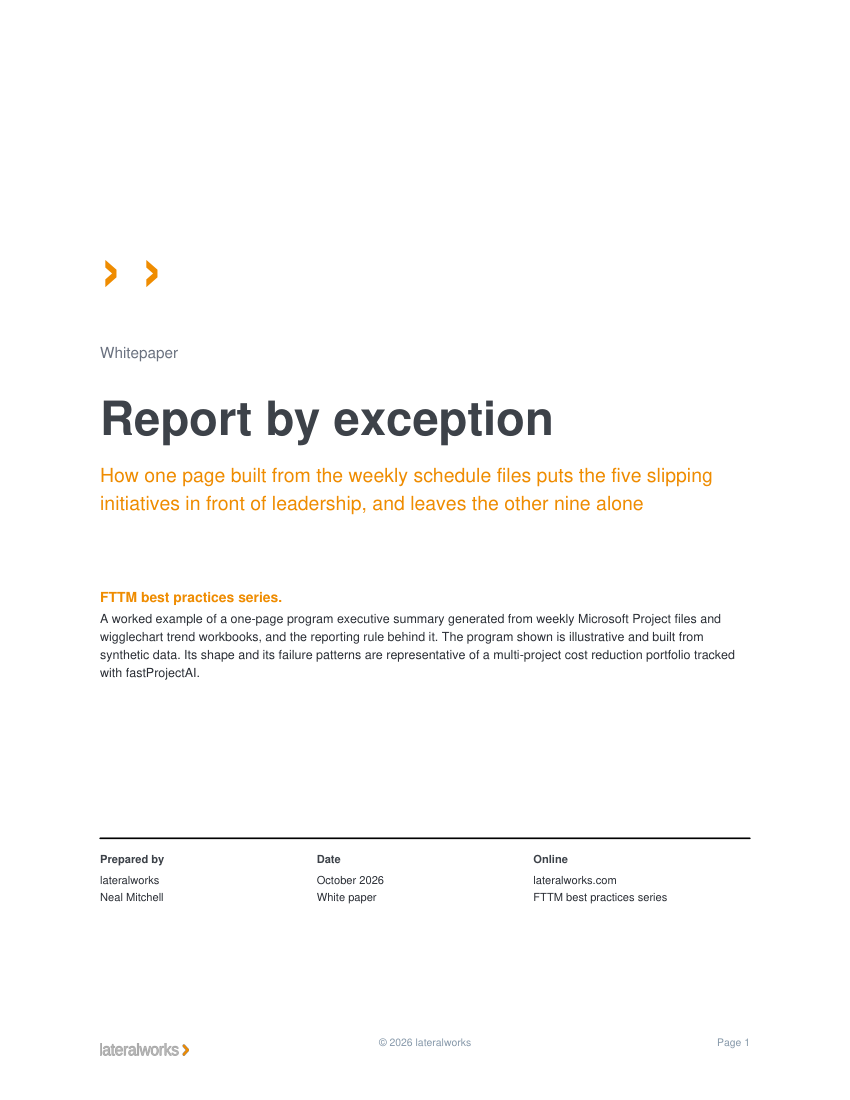
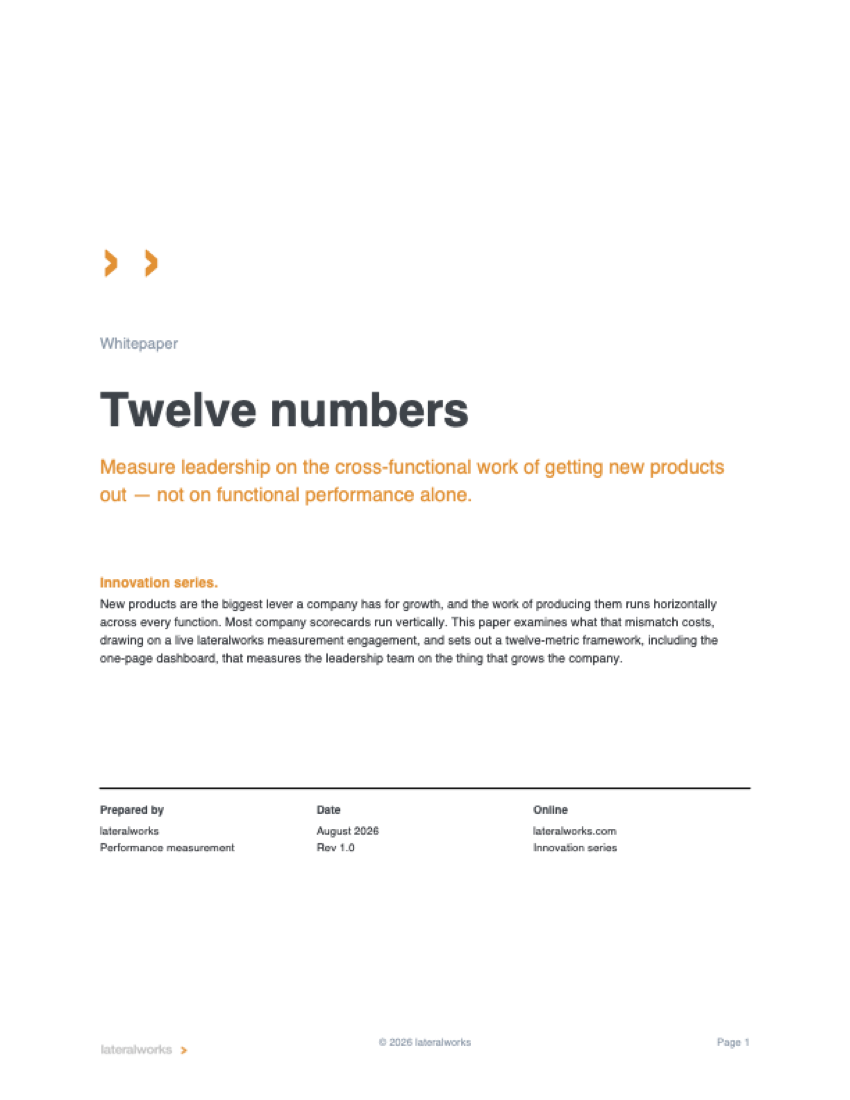
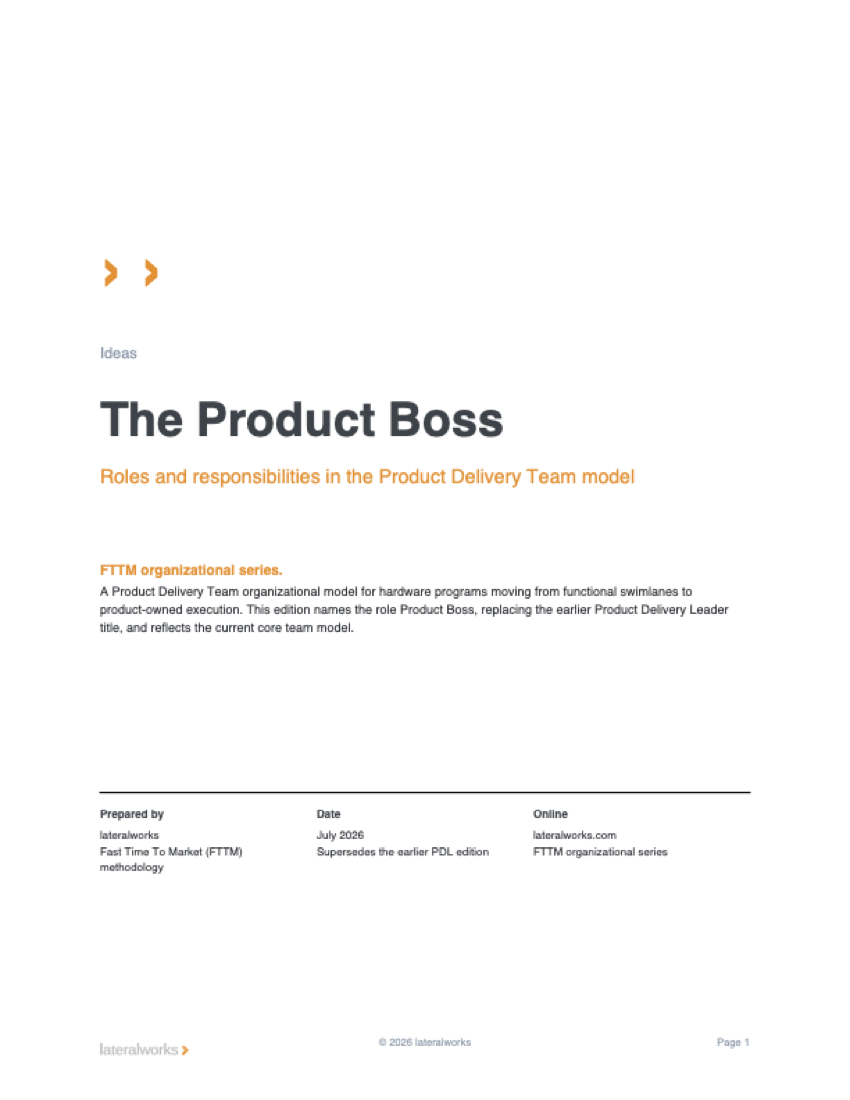
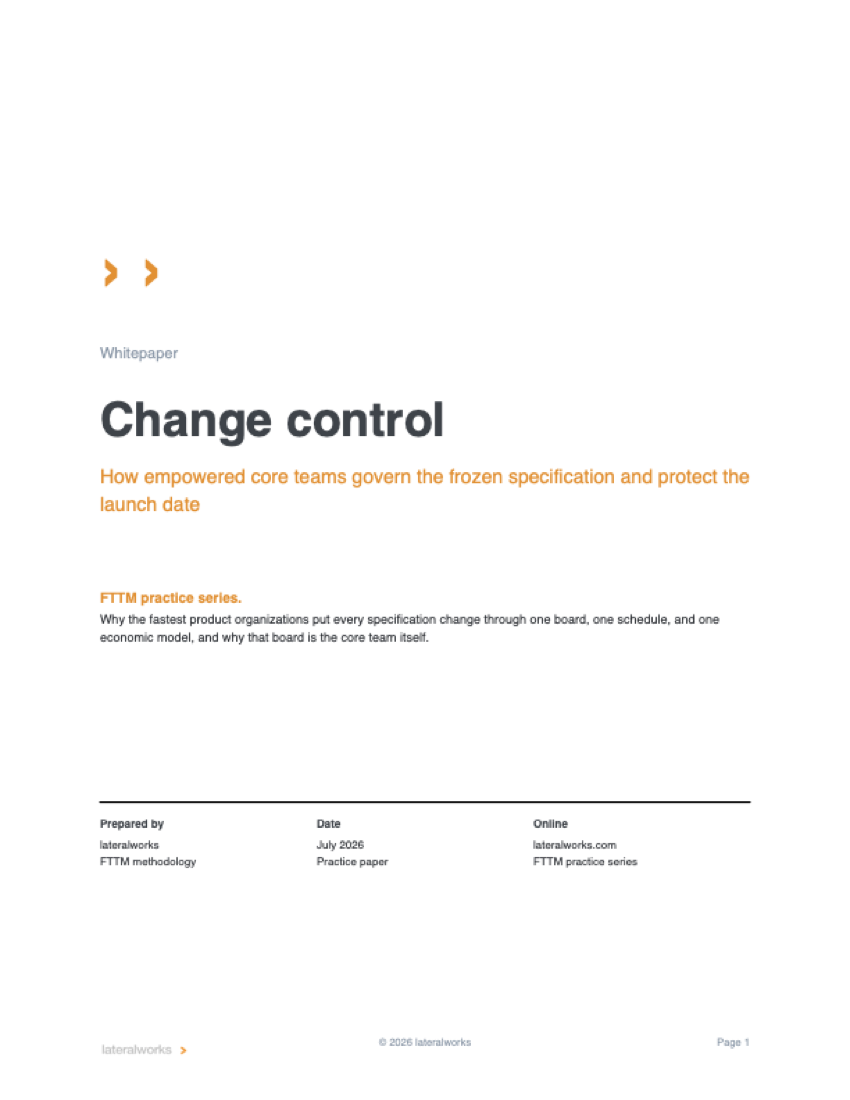
Cover of The scheduling debate
Planning·Position paper

The scheduling debate

Truth-based planning versus top-down targets

Core thesis. The debate between aggressive and realistic scheduling is a false dichotomy; the real question is who owns the plan. When the people doing the work own the schedule they fight to deliver it, and when leadership imposes it the gap between target and reality goes underground — surfacing late, expensively, and without warning.

June 1, 2026·23 pages
Cover of Cut smart, not everywhere
Portfolio·Methodology paper

Cut smart, not everywhere

Priority-based budget optimization for resource-constrained programs — how AHP decision models protect mission-critical spending and eliminate waste.

Core thesis. Every dollar is an investment in the company's primary objective: spending that accelerates the mission is protected, and spending that does not is cut. A structured decision model makes the distinction explicit, defensible, and immune to the politics that turn most cost programs into across-the-board reductions.

May 30, 2026·21 pages
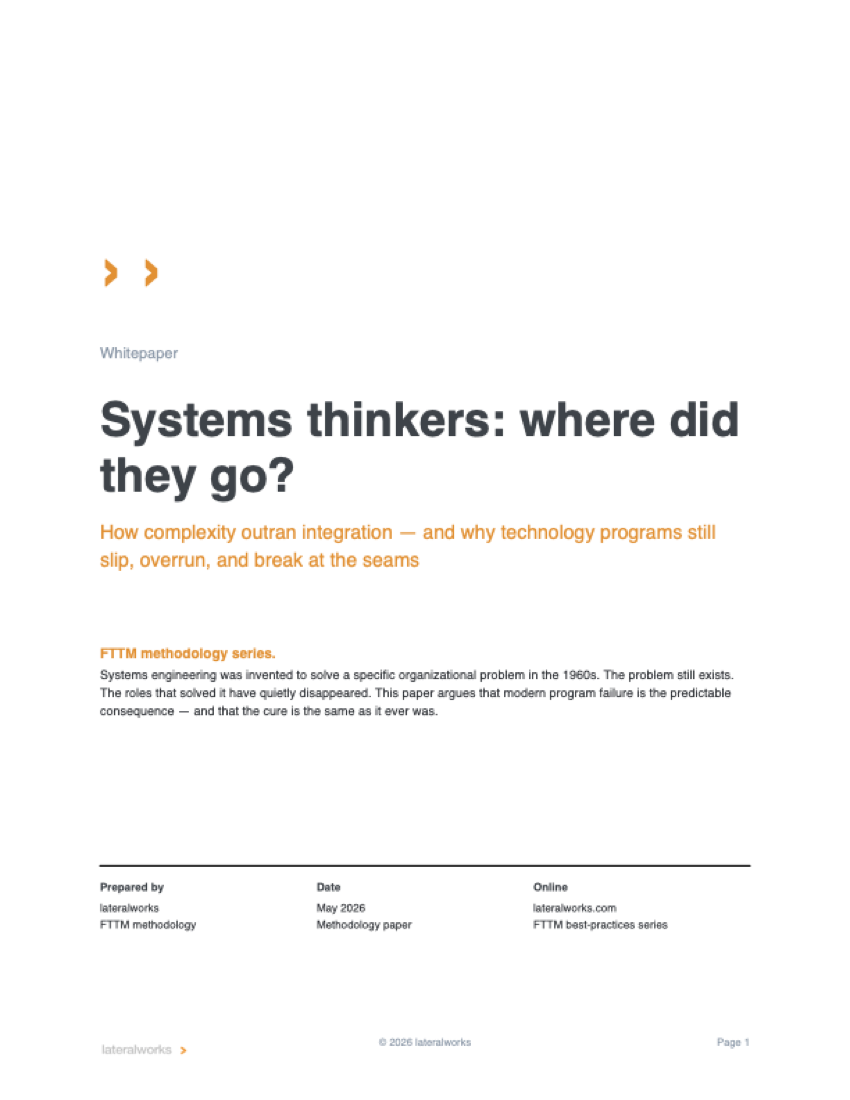
Cover of Systems thinkers: where did they go?
FTTM Methodology·Methodology paper

Systems thinkers: where did they go?

How complexity outran integration — and why technology programs still slip, overrun, and break at the seams

Core thesis. Modern program failure is not a shortage of engineering talent or project-management software. It is the absence of two roles — the systems architect and the systems planner — that once owned the integrated whole; complexity grew while the integrators disappeared, and the slips and integration failures we treat as unavoidable are the predictable result.

May 29, 2026·25 pages
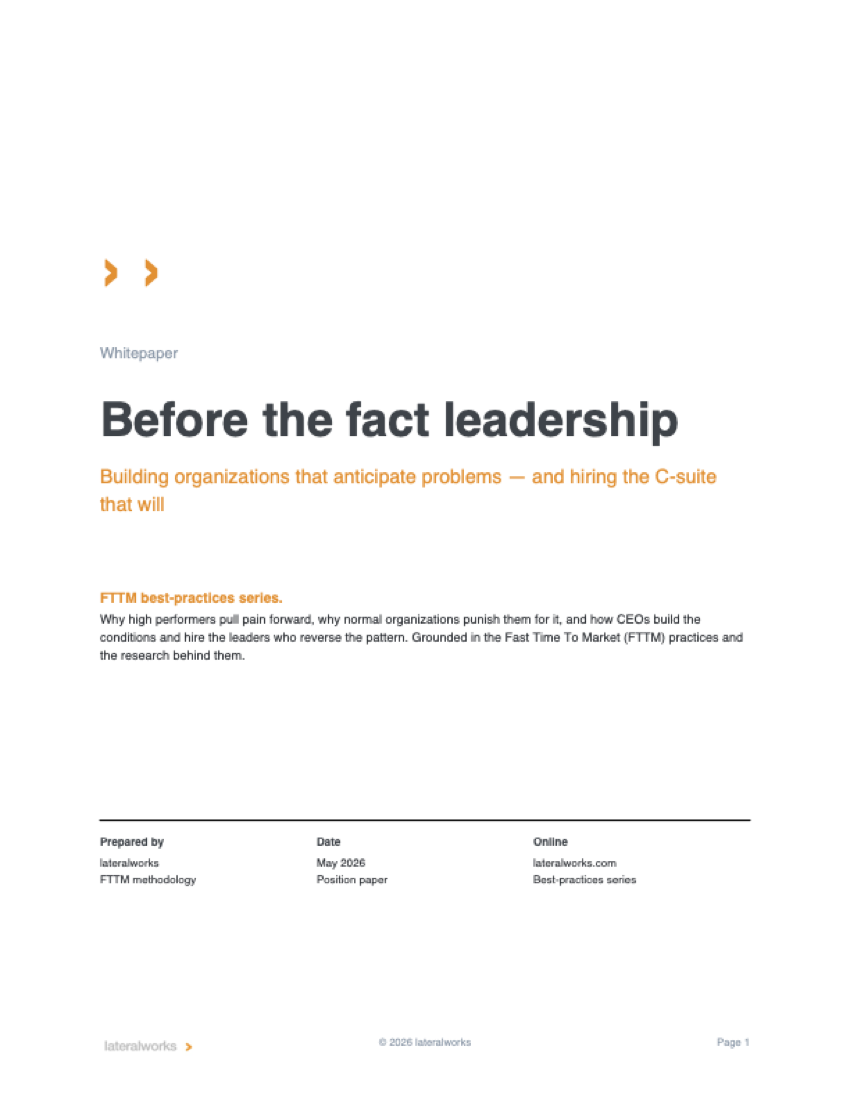
Cover of Before the fact leadership
FTTM Methodology·Position paper

Before the fact leadership

Building organizations that anticipate problems — and hiring the C-suite that will

Core thesis. The happy schedule is the blue pill; the reality-based schedule is the red pill. Anticipation is not a personality trait — it is a behavior the organization either rewards or punishes, and that C-suite leaders either model or suppress.

May 28, 2026·32 pages
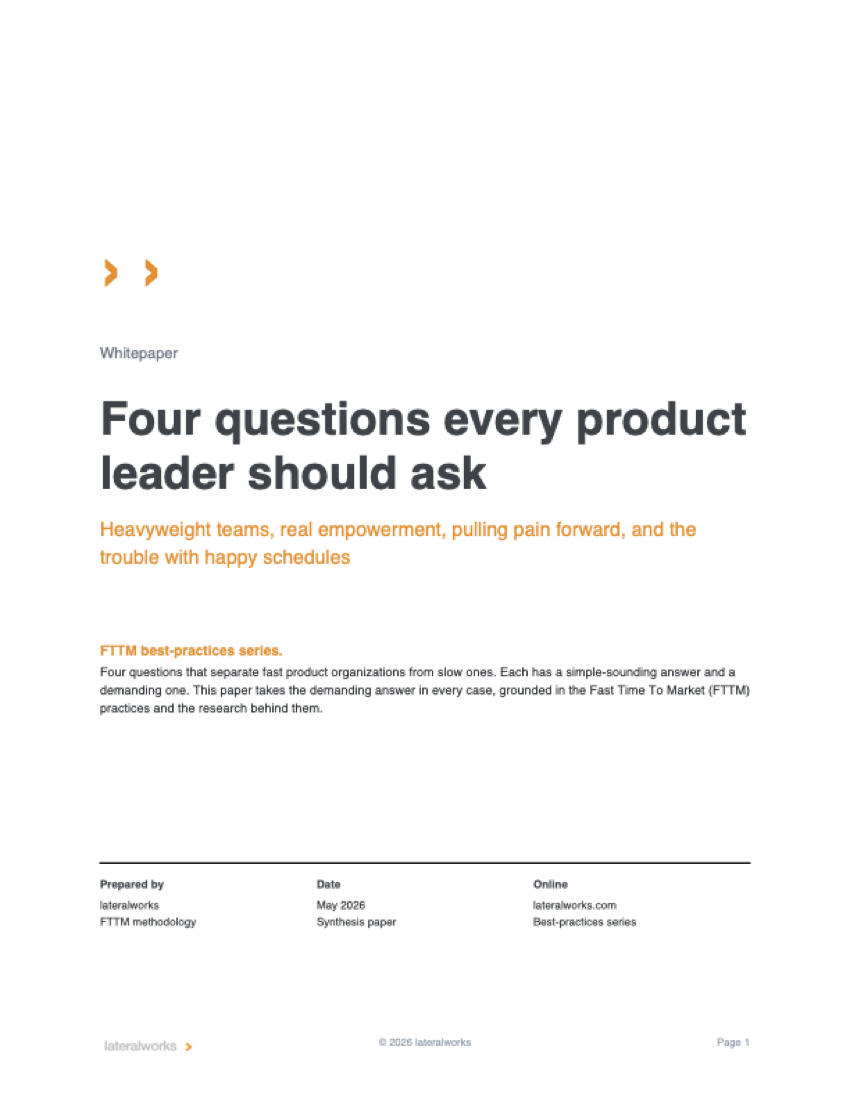
Cover of Four questions every product leader should ask
FTTM Methodology·Synthesis paper

Four questions every product leader should ask

Heavyweight teams, real empowerment, pulling pain forward, and the trouble with happy schedules

Core thesis. The four questions look like separate topics — team design, delegation, risk timing, and scheduling. They are one topic. Speed comes from a team that owns the outcome, an explicit envelope of authority that lets it act without asking, a culture that surfaces problems early, and a schedule the team believes and the organization can trust. Remove any one and the other three lose their force.

May 23, 2026·20 pages
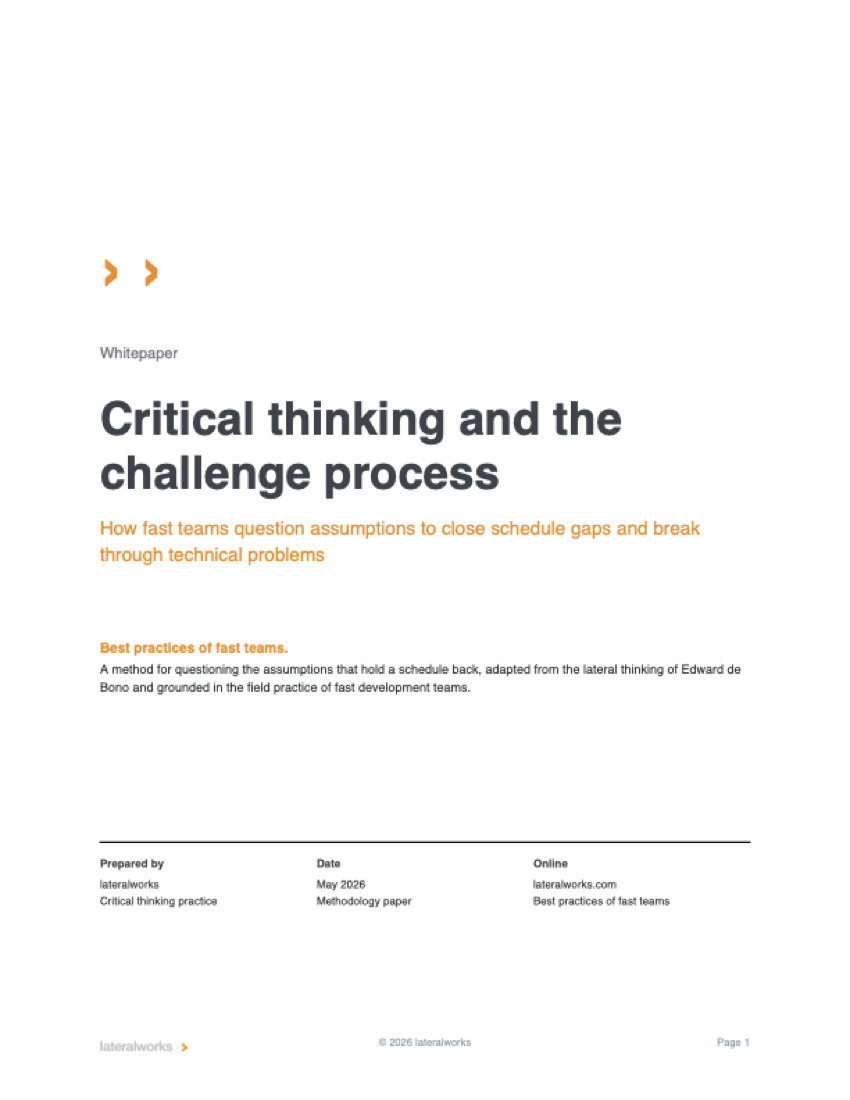
Cover of Critical thinking and the challenge process
Innovation·Methodology paper

Critical thinking and the challenge process

How fast teams question assumptions to close schedule gaps and break through technical problems

Core thesis. A late schedule is not only a tracking problem. It is a thinking problem. When a team treats its current plan as fixed, the only moves left are to admit defeat or to cut the product. Challenge opens a third move: question the assumptions behind the plan, then find a faster way to reach the same goal. Used deliberately, it turns a schedule gap into the pressure that produces a breakthrough.

May 20, 2026·27 pages
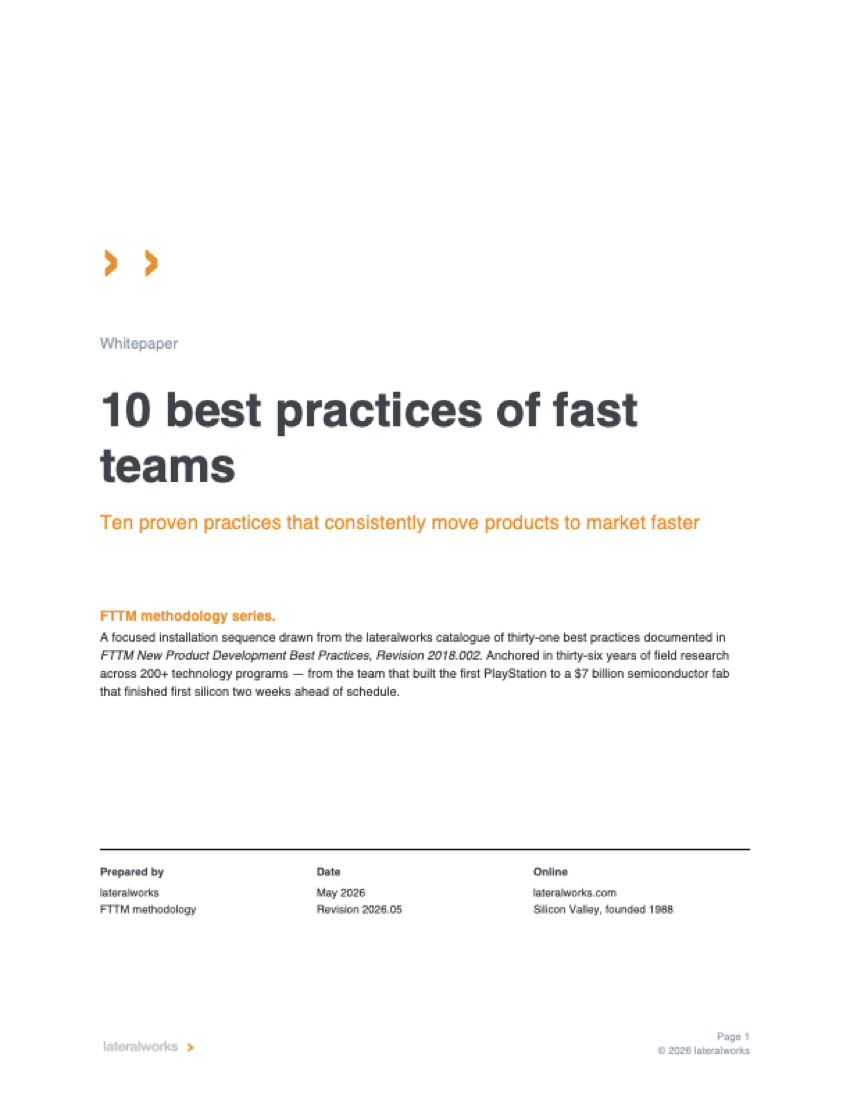
Cover of 10 best practices of fast teams
FTTM Methodology·Synthesis paper

10 best practices of fast teams

Ten proven practices that consistently move products to market faster

Core thesis. Fast time to market is not the result of working harder. It comes from ten disciplined practices, installed together, that turn the schedule into a living instrument and the team into its owner. Speed is not an outcome — it is a habit, protected one Tuesday morning at a time.

May 18, 2026·34 pages
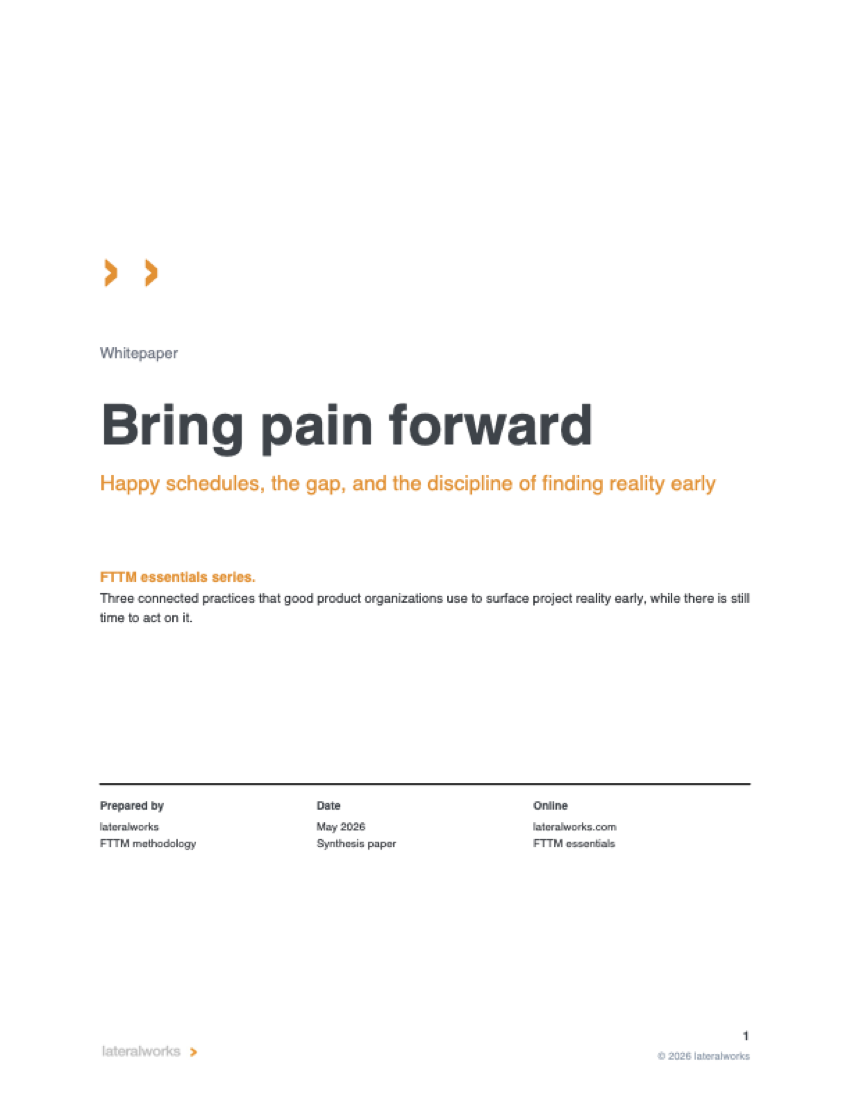
Cover of Bring pain forward
FTTM Methodology·Synthesis paper

Bring pain forward

Happy schedules, the gap, and the discipline of finding reality early

Core thesis. Three practices share a single discipline: bring reality forward in time so the team can act on it. Accelerate the pain so urgency arrives early. Build a schedule honest enough to expose the gap. Track the trend so you see slippage before it lands. Each practice fails on its own without a host environment that rewards early honesty.

May 18, 2026·17 pages
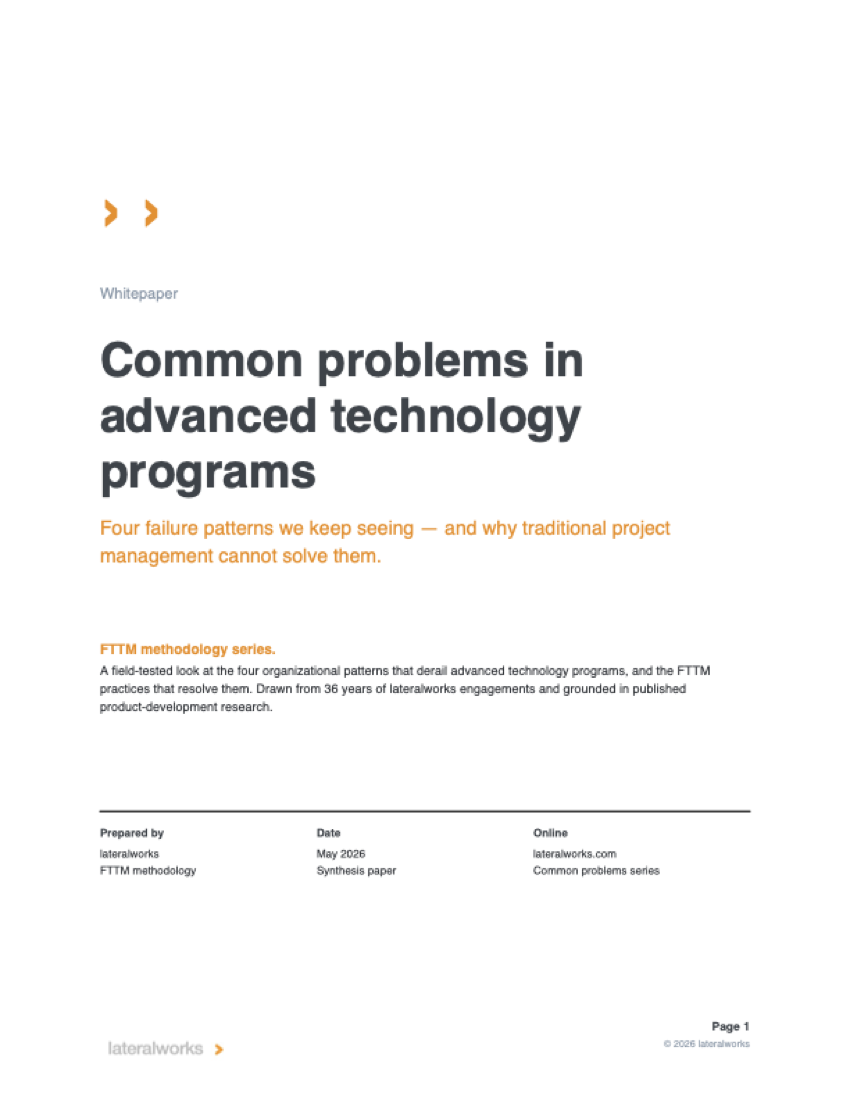
Cover of Common problems in advanced technology programs
FTTM Methodology·Synthesis paper

Common problems in advanced technology programs

Four failure patterns we keep seeing — and why traditional project management cannot solve them.

Core thesis. Advanced technology programs do not fail because the work is too hard. They fail because four organizational patterns — distributed sites, multiple companies, multiple corporate stakeholders, and simultaneous innovation with product development — overwhelm conventional project management. FTTM is the operating system built for these conditions.

May 18, 2026·17 pages
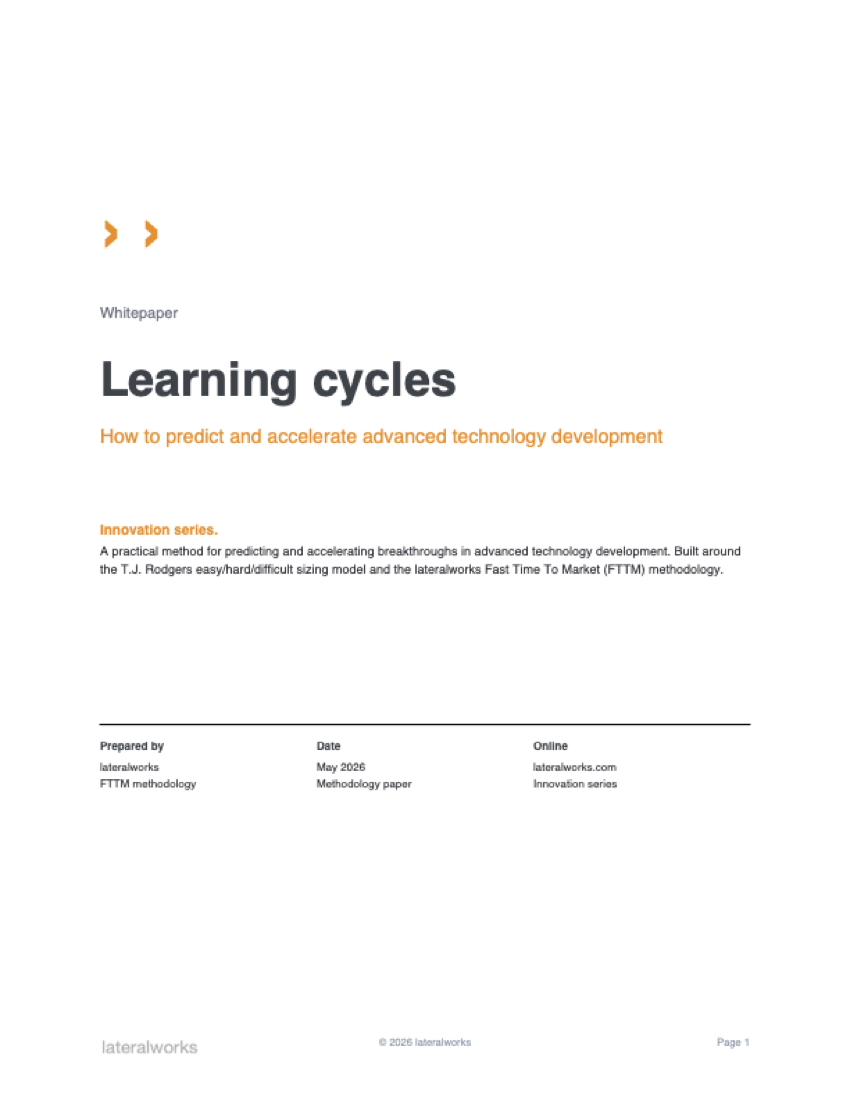
Cover of Learning cycles
Innovation·Methodology paper

Learning cycles

How to predict and accelerate advanced technology development

Core thesis. Innovation is not random. The duration of a breakthrough can be approximated by counting learning cycles and multiplying by typical cycle time, sized against problem difficulty. Programs accelerate by working two levers in parallel: more cycles running concurrently and shorter cycle time per cycle.

May 17, 2026·33 pages
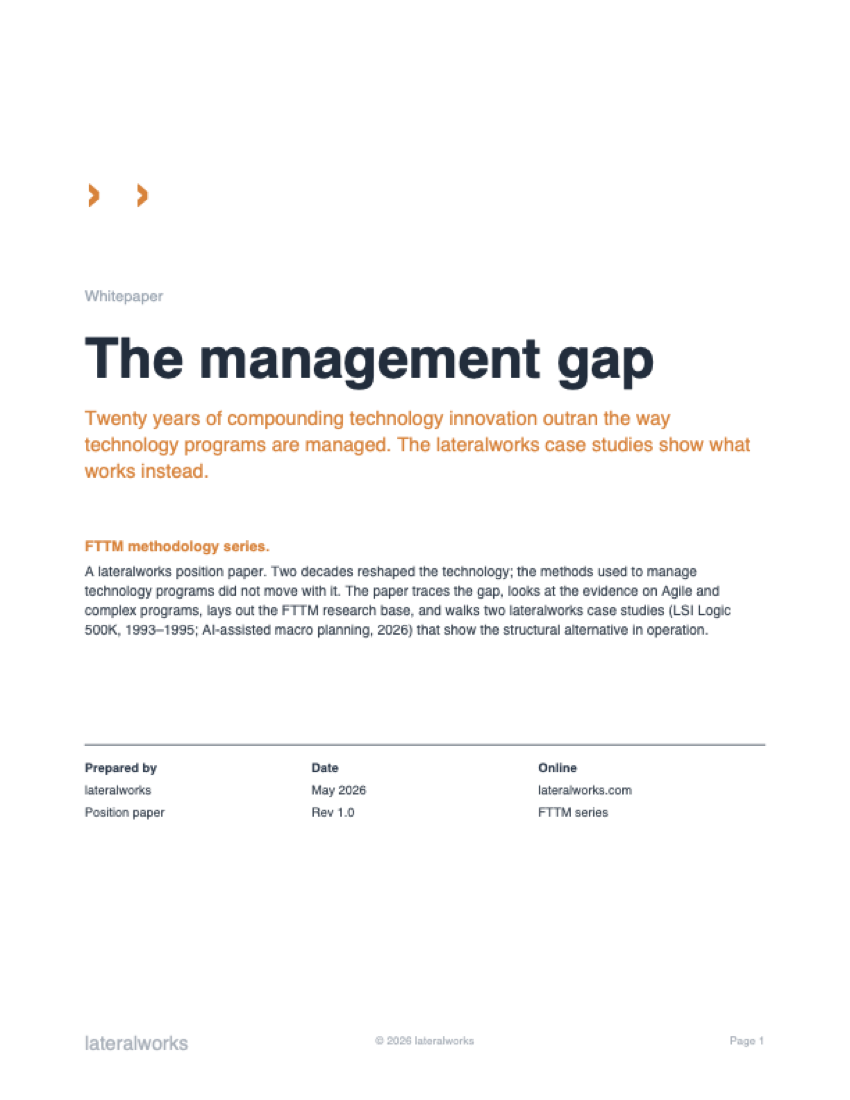
Cover of The management gap
FTTM Methodology·Position paper

The management gap

Twenty years of compounding technology innovation outran the way technology programs are managed. The lateralworks case studies show what works instead.

Core thesis. Technology capability has grown by orders of magnitude since 2005. The way technology programs are managed has not. Agile sped up feedback loops inside software teams but did not fix the structural problems that make complex programs late. The lateralworks FTTM methodology, refined since 1988 across 200+ programs, is the documented exception. The case studies are the evidence.

May 14, 2026·17 pages
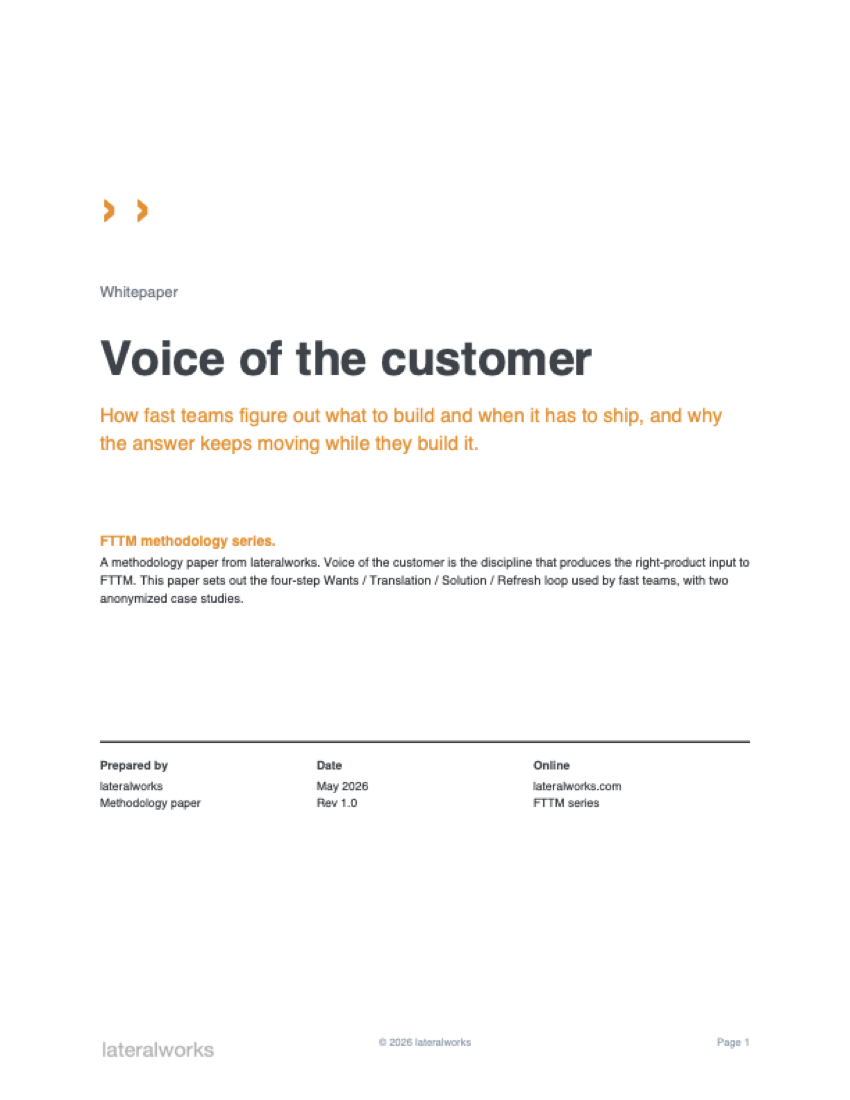
Cover of Voice of the customer
VOC·Methodology paper

Voice of the customer

How fast teams figure out what to build and when it has to ship, and why the answer keeps moving while they build it.

Core thesis. Right-product is determined first, not last. Voice of the customer is how fast teams figure out what 'right' means today, then again next month, and again until the program ships. Programs that freeze the requirements early ship the wrong product into the right window, or the right product into the wrong one.

May 13, 2026·29 pages
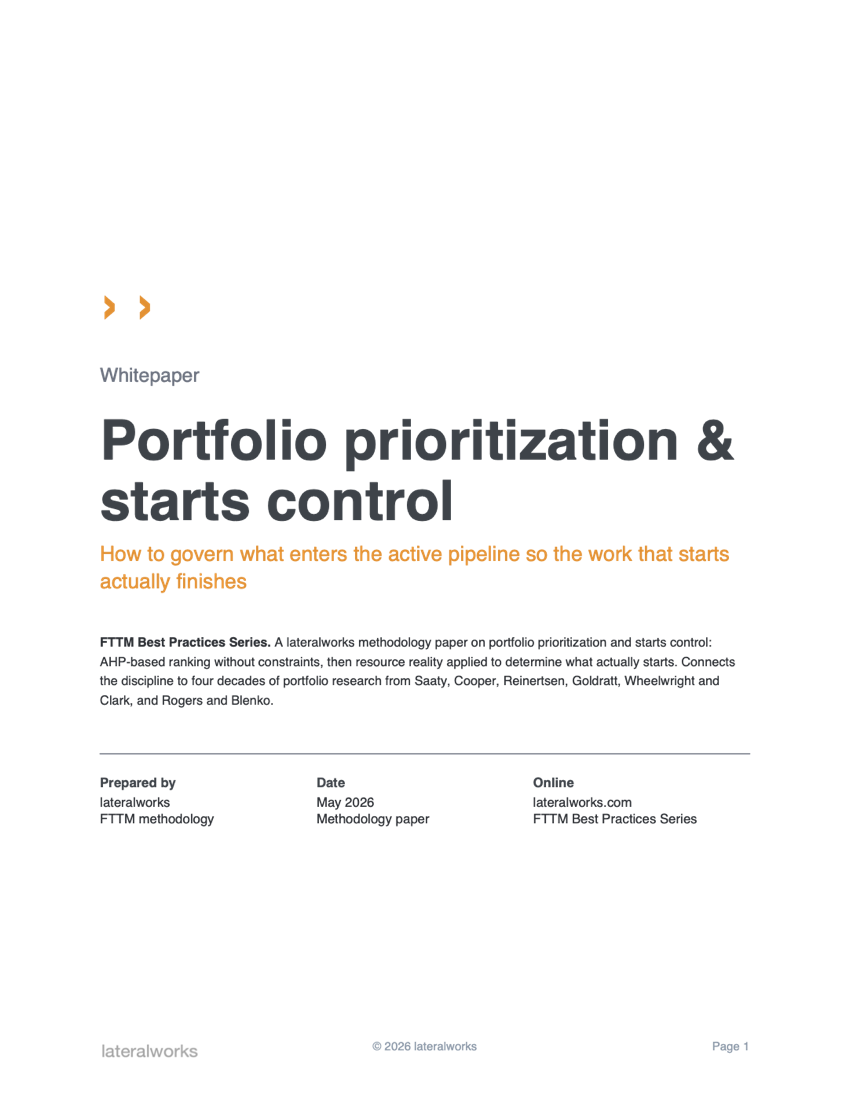
Cover of Portfolio prioritization & starts control
Portfolio·Synthesis paper

Portfolio prioritization & starts control

How to govern what enters the active pipeline so the work that starts actually finishes

Core thesis. Most product organizations start more projects than they can finish. The cure is not better execution. It is a portfolio discipline that ranks every candidate against weighted strategic and economic criteria, then gates entry to the active pipeline against real resource capacity. Rank without constraints first. Apply constraints second. One person owns the call. Starting fewer projects is how more projects finish on time.

May 10, 2026·43 pages
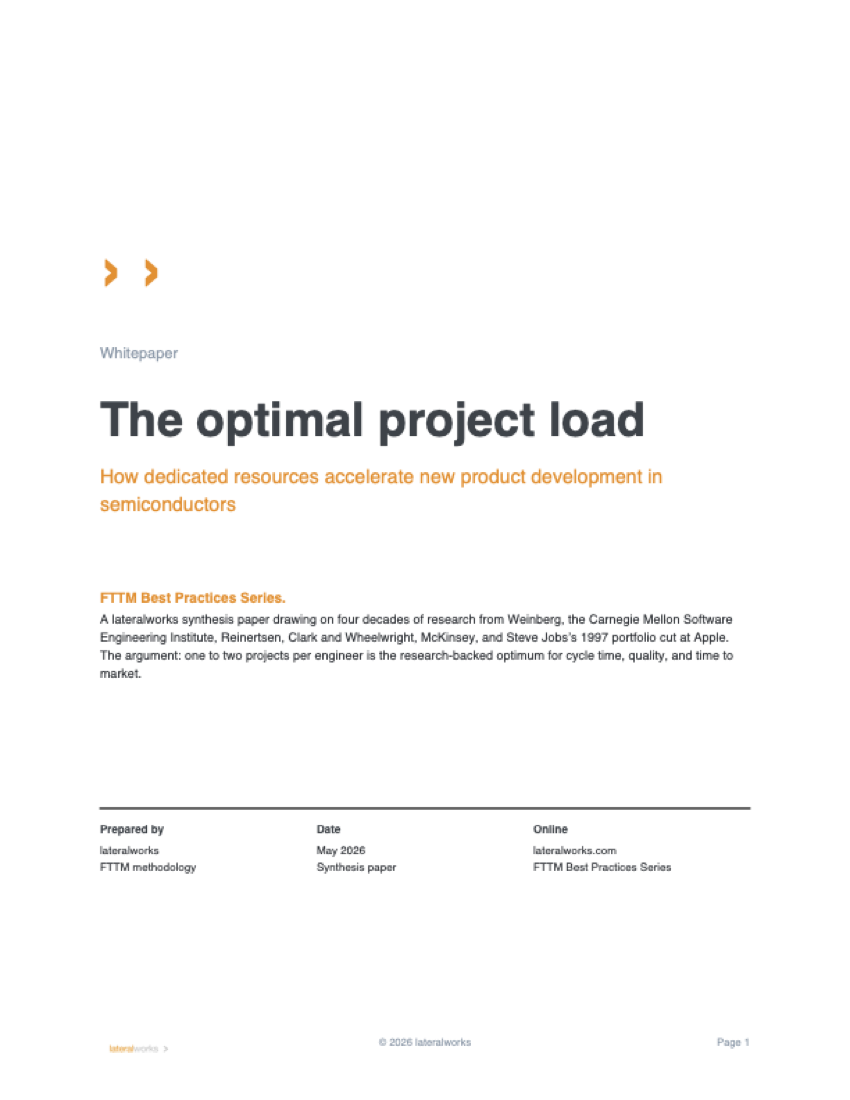
Cover of The optimal project load
Portfolio·Synthesis paper

The optimal project load

How dedicated resources accelerate new product development

Core thesis. One to two projects per engineer is the maximum sustainable load for complex new product development; past two, context switching consumes 40 to 75 percent of working time, queue delays compound at every milestone gate, and calendars slip by months — the structural fix is dedicated cross-functional product teams governed by an explicit portfolio and clear decision rights.

May 9, 2026·27 pages
Cover of Managing the fuzzy front end
Portfolio·Synthesis paper

Managing the fuzzy front end

Where the biggest schedule opportunity hides — and how to capture it through dedicated teams, a refreshed schedule, and a hard cycle-time target

Core thesis. The fuzzy front end is the largest, cheapest, and least-managed source of schedule slip in technology product development. Treat it as a real project — with a dedicated cross-functional team, a weekly-refreshed schedule, and a hard cycle-time target — and months come out of the development calendar without compressing the engineering work that follows.

May 9, 2026·32 pages
Cover of fastProjectAI Project Portfolio Dashboard
FTTM Toolkit·Synthesis paper

fastProjectAI Project Portfolio Dashboard

Aggregating live project schedules into a single leadership view

Core thesis. Most leadership teams running multiple programs cannot see their portfolio in time to act. fastProjectAI fixes this by aggregating live wigglechart data the PMs already maintain — surfacing the small number of projects that need attention this week, not the long tail that does not.

May 1, 2026·29 pages
Cover of FTTM Process Maturity
FTTM Methodology·Methodology paper

FTTM Process Maturity

A framework for measuring and improving team performance

Core thesis. A team’s schedule maturity is observable, measurable, and migratable. Teams move through four levels — from ML0 (no schedule) to ML3 (active acceleration) — by changing specific behaviors in the weekly refresh. Knowing where a team sits on this curve is the prerequisite to changing it.

April 29, 2026·23 pages
Cover of Host best practices
FTTM Methodology·Revised edition

Host best practices

How executives create the conditions for fast product development

Core thesis. Teams deliver products; the host creates the conditions under which they deliver fast. Fix the host and speed becomes the default. Leave the host alone and team-level improvement fades within a year.

April 27, 2026·48 pages
Cover of Team best practices
FTTM Methodology·Companion edition

Team best practices

How fast teams get the right product to market at the right time

Core thesis. A fast team organizes itself around the customer (right-product), assembles the smallest competent group of role-owners (right-team), and uses its schedule as the primary tool for driving decisions and exposing gaps (right-time). Inside a provisioning host, these 15 practices cut time-to-market by 30 to 50 percent.

April 27, 2026·31 pages
Cover of Managing up, managing down, and the innovation paradox
Innovation·Synthesis paper

Managing up, managing down, and the innovation paradox

Why senior-manager failure modes kill the innovation their organizations depend on

Core thesis. Innovation needs encouragement before scrutiny, but most organizations evaluate too early and kill fragile ideas. Senior managers either over-invest in managing up (optimizing the upward narrative) or over-invest in managing down (deep in operational weeds). Both break the protection-from-above the innovation environment depends on.

April 26, 2026·22 pages
Cover of FTTM Product Development Best Practices
FTTM Methodology·Methodology paper

FTTM Product Development Best Practices

Three decades of fast-team research, 2018 revision

Core thesis. FTTM outcomes are a function of two inputs — the behavior of the team and the environment within which the team operates. Best practices observed across hundreds of programs are codified into a Mindset / Host / Team framework that delivers the right product at the right time.

July 18, 2018·101 pages

21 papers. More papers added regularly.